Placental Variants That Matter: Succenturiate Lobe, Circumvallate, and Placental Lakes
0% Complete
Course Overview
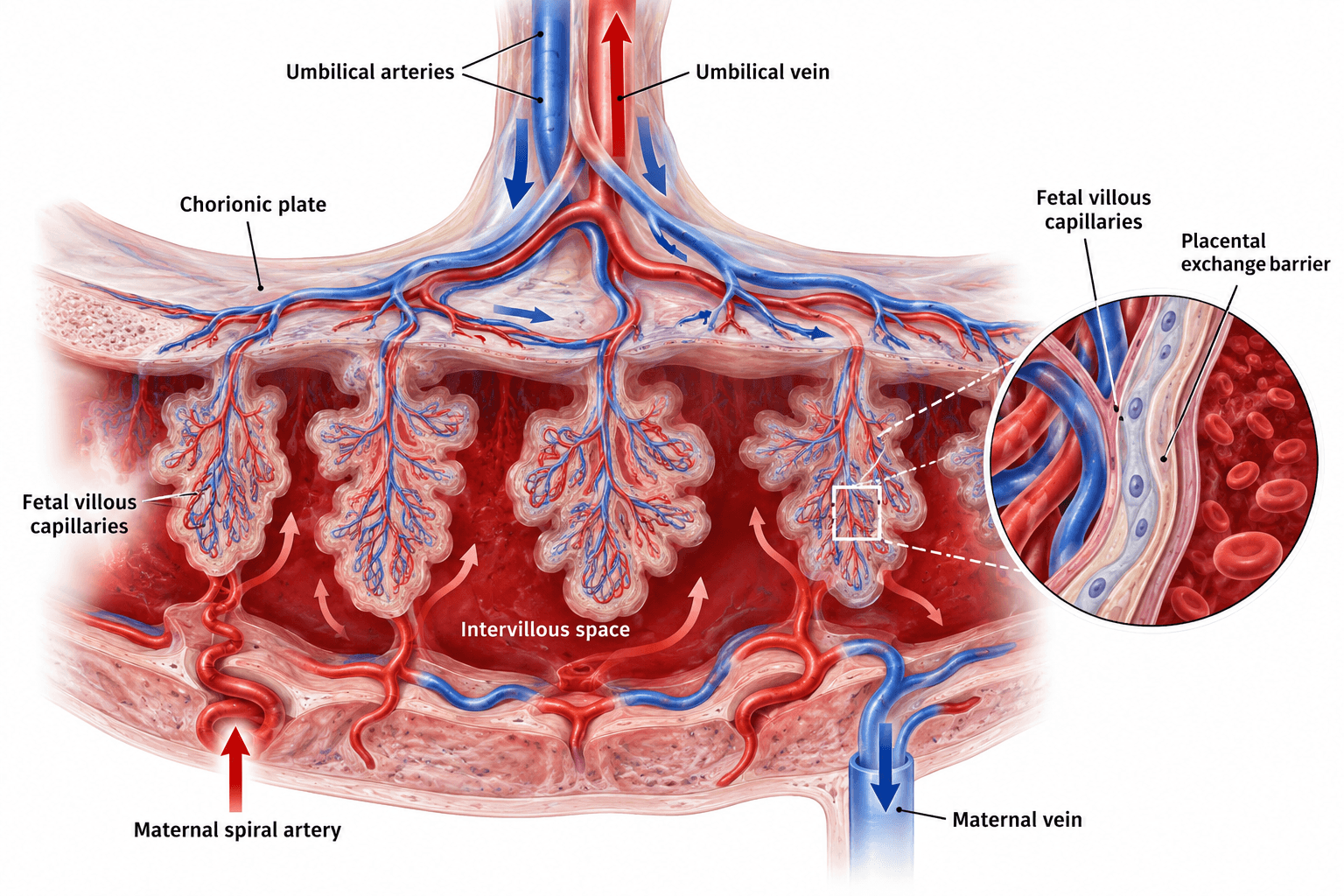
Placental findings are common in obstetric ultrasound, but recognizing that something looks different is only the first step. What is it? Does it matter? What else should you look for? The answer comes from understanding placental morphology, recognizing key sonographic clues, and knowing when color Doppler or additional imaging is needed.
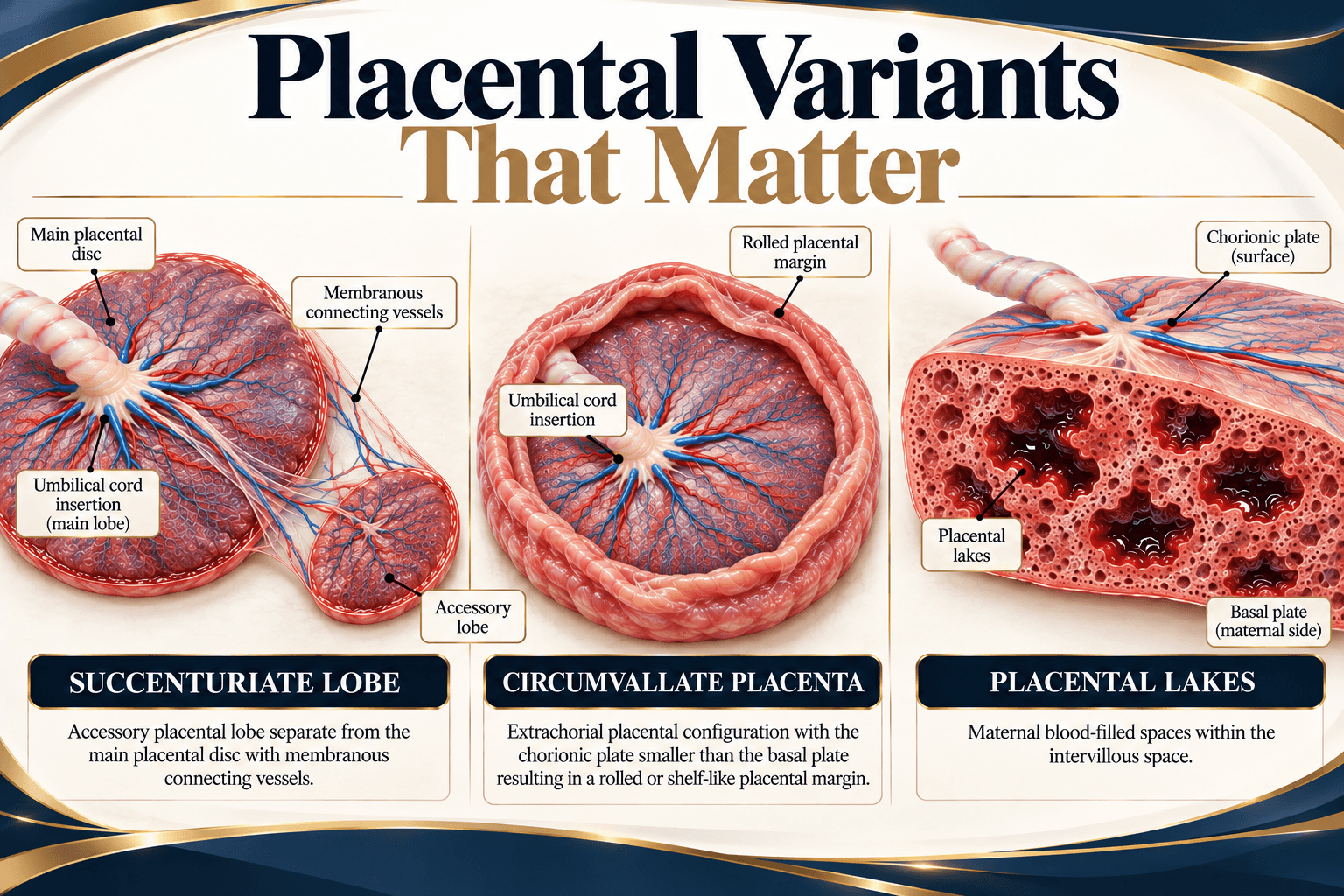
This course takes a practical look at three placental findings that can create questions during an OB examination: succenturiate placental lobes, circumvallate placenta, and placental lakes. Rather than simply defining each finding, we will break down what they actually look like on ultrasound, how to evaluate them, what can mimic them, and why accurate recognition and documentation matter.
Participants will learn how to identify a suspected accessory placental lobe and follow the vessels, evaluate the membranes and relationship to the cervix, recognize features that may suggest a circumvallate placenta without overcalling the diagnosis, and assess placental lakes within the context of the entire examination.
Using ultrasound examples and case-based teaching, we will move beyond “I see something in the placenta” to a more systematic approach:
What am I seeing? → What should I check next? → Do I need color Doppler? → What should I document? → Does this finding change what happens next?
The goal is simple: See it. Evaluate it. Document it. Understand why it matters.
Course Content
Credits
* AMA PRA Category 1 Credit™ is designated for and awarded to physicians. Non-physician healthcare professionals, including physician assistants, nurse practitioners, and sonographers may participate in activities accredited for AMA PRA Category 1 Credit™; their respective credentialing and professional organizations independently recognize such participation toward their own continuing education requirements. Organizations that accept AMA PRA Category 1 Credit™-accredited courses toward non-physician CE include ARDMS, CCI, and Sonography Canada.
Course Details
- Duration
- 1.00 hour
- Released
- Nov 7, 2026
- Last Review
- Nov 7, 2026
- Expires
- Nov 6, 2029
Objectives
Upon completion of this activity, participants should be able to:
Identify the key sonographic features of a succenturiate placental lobe, circumvallate placenta, and placental lakes.
Differentiate these placental findings from common mimics and recognize imaging features that warrant additional evaluation.
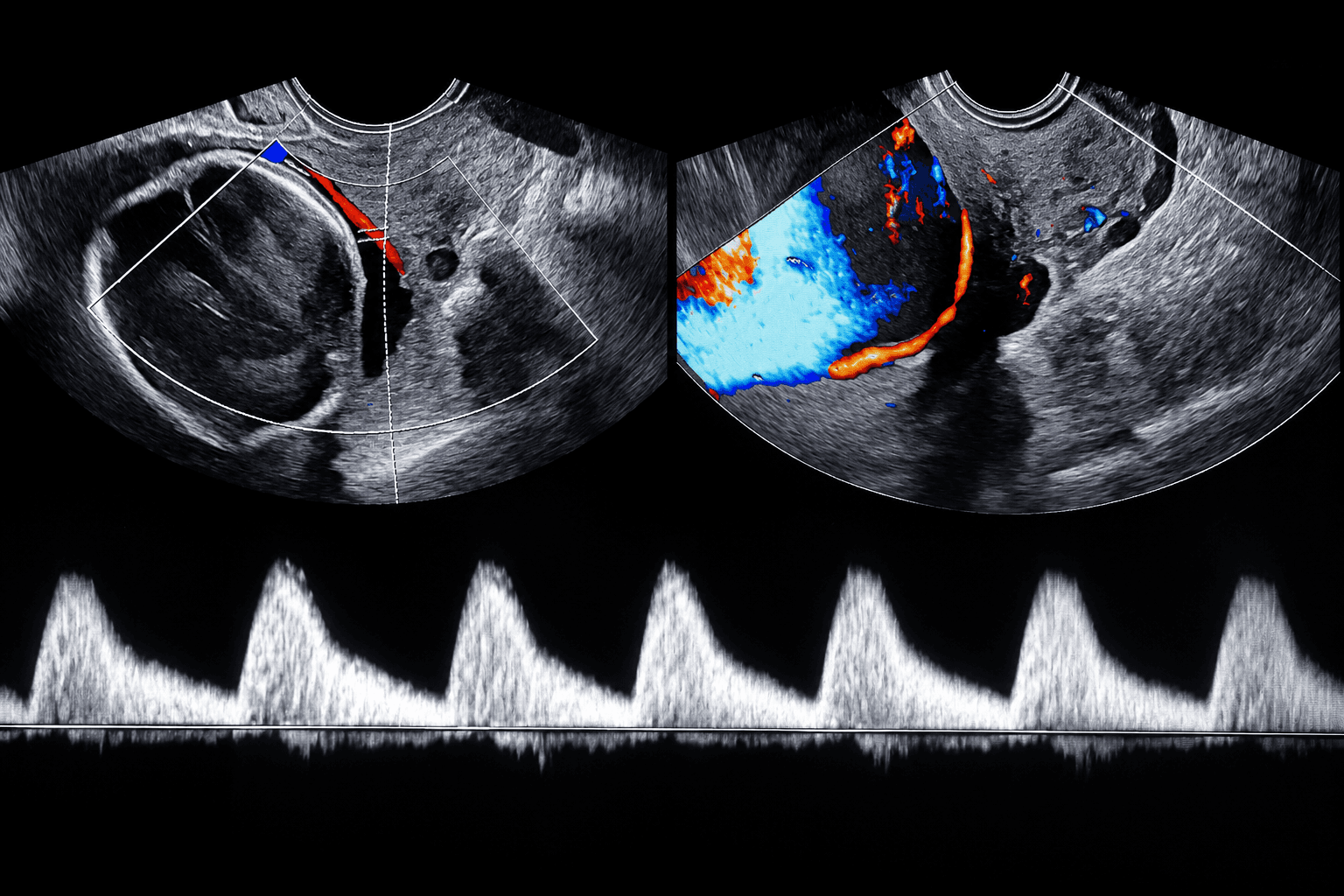
Apply grayscale and color Doppler techniques to appropriately evaluate placental morphology, margins, accessory tissue, and vascular relationships.
Document placental findings using appropriate terminology and communicate clinically relevant observations in the ultrasound report.
Recognize when a placental finding should prompt evaluation for associated complications or additional clinical follow-up.
Target Audience
Physicians
Sonographers
Others who perform and/or interpret ultrasound.
Faculty & Disclosure
Faculty
Lashell Jones RDMS, RDCS
Disclosure
Accreditation
The Institute for Advanced Medical Education is accredited by the Accreditation Council for Continuing Medical Education (ACCME) to provide continuing medical education for physicians.
The Institute for Advanced Medical Education designates this enduring material for a maximum of 1.00 AMA PRA Category 1 Credit™.
Physicians should only claim credit commensurate with the extent of their participation in the activity. Sonographers: These courses are accepted by the American Registry for Diagnostic Medical Sonography (ARDMS), Sonography Canada, Cardiovascular Credentialing International (CCI), and most other organizations.
Non physicians: AMA PRA Category 1 Credit™ is designated for and awarded to physicians. Non-physician healthcare professionals — including physician assistants, nurse practitioners, and others — may participate in activities accredited for AMA PRA Category 1 Credit™; their respective credentialing and professional organizations independently recognize such participation toward their own continuing education requirements.